


For those embarking on longer car journeys spanning multiple countries, meticulous route planning is a must. While it's commonly understood that most drivers must pay tolls in Slovenia, the specifics of which roads necessitate toll payments remain elusive.
Slovenia, renowned for its allure as a holiday destination and transit hub, boasts a well-defined road network linking neighboring countries and key urban centers. Broadly, the majority of motorways traversing the nation require toll payments. Given that these motorways serve as primary routes for travelers, tourists are typically subject to toll charges. Certain expressways are also encompassed within this toll scheme. Often overlooked by many drivers is the fact that entry ramps are also considered part of the toll road network. Consequently, traffic circles and brief stretches of road leading to toll highways fall under this category. Hence, it's imperative to procure a vignette for Slovenia well in advance to ensure readiness for any segment of the journey.
In Slovenia, toll routes primarily comprise motorways and expressways. Among these, five main motorways stand out for consideration when planning travel routes. The pivotal A1 motorway is the foremost, inevitably leading most holidaymakers across Slovenia. Commencing at the Austrian Pyhrn Autobahn A9 junction in Šentilj, northeast Slovenia, it traverses the country extensively. Another vital link is the A2 motorway, situated along the Austrian border, also serving as a passage to Croatia via the Bregana border crossing. Functioning as a connector to Italy, the A3 motorway facilitates travel between Slovenia and its southern neighbor. Similarly, the A4 motorway extends into Croatia at Macelj. For travelers bound for Hungary, the A5 motorway offers a direct route. The following list furnishes an overview of all motorways. Note that vehicles exceeding 3.5 tons require a DarsGo box.
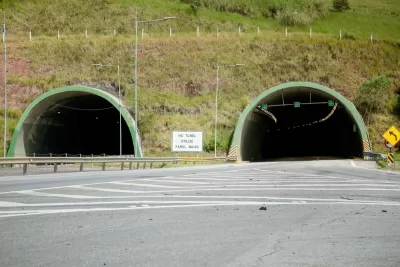 The Karavanke Tunnel, bridging Slovenia and Austria, constitutes a road segment subject to distinct regulations.While no vignette is mandated for traversing the tunnel, tolls are levied on the two freeways leading to it from both Slovenian and Austrian territories. Slovenia's access route to the tunnel is via the A2 motorway. Toll charges vary depending on the vehicle type, whether motorcycle, standard passenger car, or those weighing over 3.5 tons.
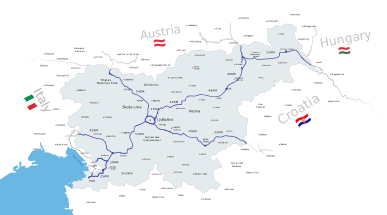
The A1 Motorway (Slovene: Avtocesta A1),also known as Slovenika, spans 245.3 km (152.4 mi), linking Šentilj (at the Austrian border) and Koper/Capodistria (on the shores of the Adriatic Sea). It serves as a vital connection between several major metropolitan areas of the country, including Maribor, Celje, and Ljubljana, extending all the way to the Slovenian Littoral and the port town of Koper.
The A1 Motorway facilitates the connection between Slovenia and Austria (with the only other motorway with a border crossing to Austria being the A2 Motorway) and has been a significant route from its inception. It notably links the three largest cities in Slovenia – Ljubljana, Maribor, and Celje. Furthermore, it connects these urban centers with the Slovenian coast, enhancing transit conditions to the Port of Koper. As of 2013, it stands as the sole motorway interconnected with all other motorways in Slovenia.
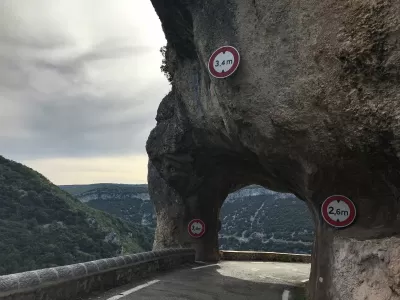
For drivers contemplating bypassing toll routes, a few considerations must be kept in mind. Firstly, this strategy might not be feasible for those aiming for the quickest route to their destination. Since steering clear of toll roads also entails avoiding direct expressways and motorways, in most cases, it necessitates taking a significant detour. Therefore, routes through Slovenia to Croatia without a vignette are primarily suitable for travelers interested in exploring Slovenia's small towns, making occasional stops, and perhaps indulging in the surrounding landscapes.
When charting your course, it's essential to recognize that not all toll-free routes are suitable for all vehicles. Drivers of large motorhomes, vehicles towing trailers, or vehicles weighing over 3.5 tons are strongly advised to visit one of the sales offices and adhere to official roads. The "back roads" often lack adequate development or are too narrow for larger vehicles. Below, we'll outline a selection of toll-free routes leading to popular holiday destinations.
While travelling on the A4, there is the opportunity to explore nearby landmarks and settlements. Maribor itself oozes mediaeval charm. Nearby is a ski resort for skiing enthusiasts.
While it demands more time, the journey to Istria offers numerous attractions along the way, such as Pula. To avoid inadvertently veering off the route or ending up on a toll road (and incurring a €300 fine), employing a navigation system is advisable. One route to Istria is via the E61 in Slovenia. Initially, you traverse the road towards the Krvavi Potok border crossing, situated between Italy and Slovenia. Then, proceed along road 409 until reaching the Socerga border crossing. Subsequently, you'll arrive at Buzet and then the village of Lupoglav. Here, you must utilize an expressway, subject to Croatian toll regulations. Nevertheless, due to the detour, you've bypassed toll charges in Slovenia.
 For travelers in Trieste, northeastern Italy, seeking a toll-free route through Slovenia to Kvarner Bay, avoiding the E751 or expressway 6 is crucial, as tolls apply on both routes. An alternative is the E61. To reach the renowned coastal town of Rijeka, first head towards Basovizza. Following that, you'll arrive at the Kozina border crossing and then the Croatian border at Sapjane. Throughout this journey, stick to the E61, with the final segment requiring the use of a motorway. This route offers the shortest path to bypass tolls in Slovenia, although there are likely other routes leading to Kvarner Bay.
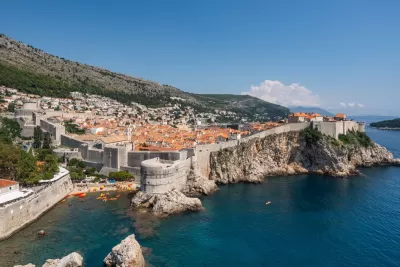
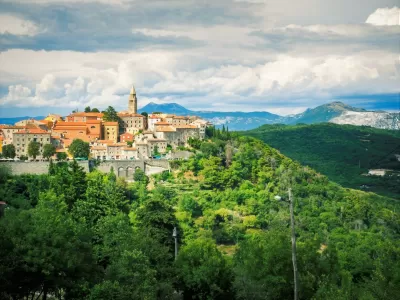 Vacationers bound for Dalmatia often include a stop in the vibrant city of Split, the largest urban center in southern Croatia. An alternative route exists, devoid of tolls, which presents a distinctive travel experience. This path, albeit scenic, demands additional time compared to the conventional toll route. Departing from Trieste, opting for toll-free roads via Slovenia elongates the journey by nearly two hours. Instead of adhering to the familiar E71, the E61 and D50 unveil an alternative passage. However, navigating this course mandates reliance on a GPS device to maintain course accuracy. Should the expedition extend beyond Split to encompass the enchanting destination of Dubrovnik, the odyssey gains further duration. Along the trajectory to Dalmatia, a traverse through numerous townships is requisite, yet it offers a passage through Slovenia devoid of the obligatory vignette.